Friday, June 29, 2007

Malt Mission 2007 #110

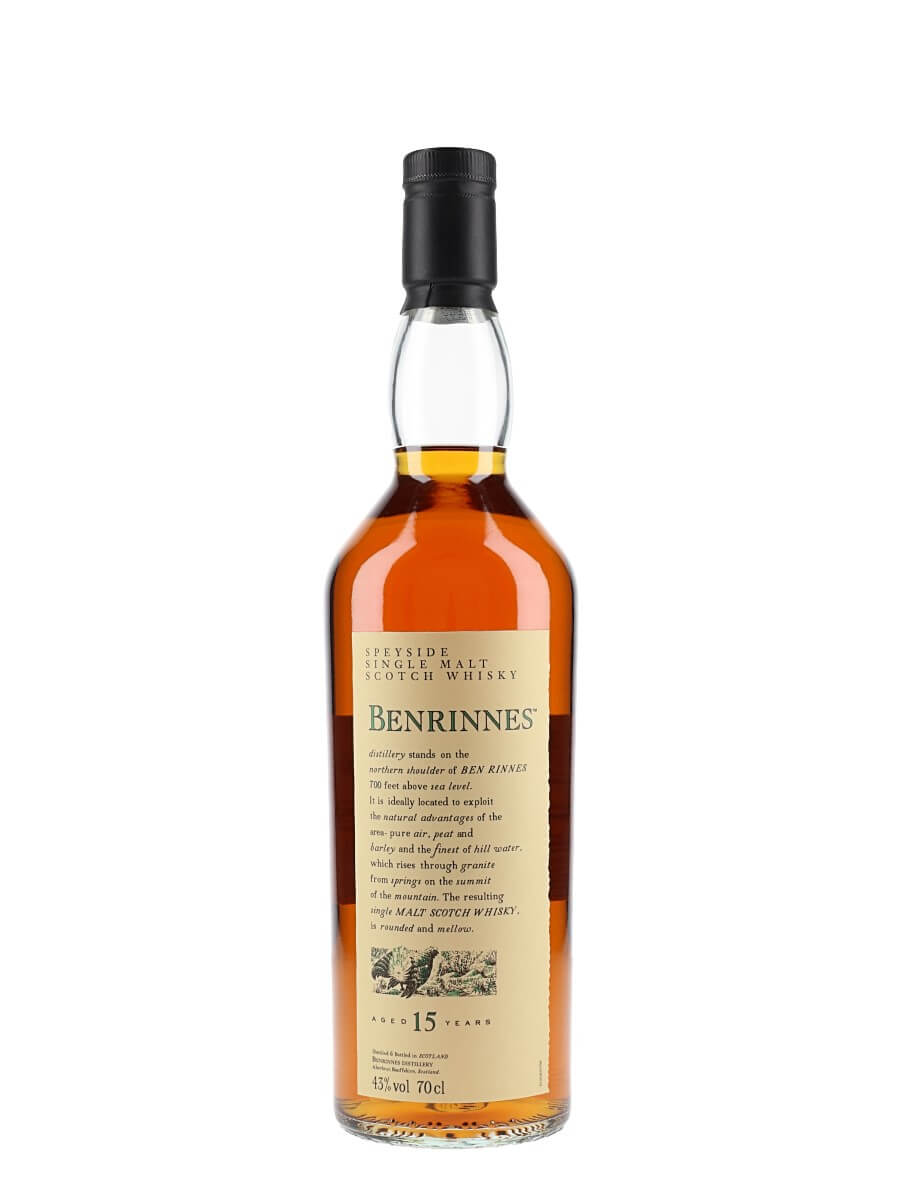
Benrinnes 15yo
Speyside Single Malt Whisky
43% abv
£32

Flora & Fauna bookends to this week on the mission. Now listen, I fully acknowledge that this is not exactly a posh dram, no major climax to end the week. Well, sorry. Here's a criticism for you: Why haven't you sent me some of your Talisker 25 or Brora 30yo!!!? And what's your excuse, Diageo? Thanks to Royal Mile Whiskies for sharing this sample.

Ben Rinnes is the dominant mountain (Ben) that lurks over the heart of Speyside, standing to the east as you drive up the A95 from Grantown towards Aberlour. The distillery is far less beautiful than its surroundings, but it does have a few unique touches that add to its charm. Benrinnes uses worm tubs (like Cragganmore tasted Tuesday), used to use Saladin box maltings, and since 1956 has used an unusual form of triple distillation with 6 stills grouped in threes, similar to that of Springbank; one wash still, two spirit stills in each set. (What the hell is he talking about? Distillation stuff pretty well explained HERE) Take it away, Dave Broom (nerds only beyond this point):

"The higher-strength heads from the wash still go into one receiver, while the tails are diverted to another. The heads are then sent as a part of the charge to the second of the spirit stills. The tails, meanwhile, are redistilled in the intermediate sprirt still along with the foreshots and feints from its previous distillation. The middle cut is then collected to become part of the charge for the second spirit still along with the heads of the wash still distillation and the foreshots and feints of its previous distillation. This means that some of the new make will have been distilled 3 times, some of it twice."

Oh, one more thing of interest to some; Benr
innes has a long history tied to the Crawford's blended whiskies and is currently found in Dewar's, J&B, Johnnie Walker Red and Black.

A Benrinnes I had earlier in the Malt Mission can be viewed HERE. A website that inspired this blog's format talks about Benrinnes. A good weekend to you all.

TASTING NOTES:

Sweet molasses, fudge, room temperature butter. Saucy. Buttermilk, turning slightly vinegar-y to brown sauce, sweet and sour 'Chinese' food. Definite sherry presence.

Slightly sour off the top, sour candies. Builds in confidence becoming toasty and creamy. Sherry characteristics, prunes. Quite robust, dark chocolate and oak.

SUMMARY:

Not sure what Jim Murray and other critics of this stuff are on about, but this is a perfectly impressive whisky. Confident flavours, not too complex, but a sort of rich dried fruit creaminess and a fresh juiciness that is totally pleasant. To me.

Malt Mission #106
Malt Mission #107
Malt Mission #108
Malt Mission #109

Malt Mission HOME

Thursday, June 28, 2007

Malt Mission 2007 #109

Dalwhinnie 15yo
Highland Single Malt Whisky

43% abv
£27

$68.70(CAD)

$50(USD)


Some would approach Dalwhinnie and be convinced that it is the quintessential Scottish distillery. With twin pagoda roofs that can be seen from the motorway (A9), isolated in a glen surrounded by mountains, Dalwhinnie is the coldest inhabited settlement (less angel's share lost!) and the highest distillery in Scotland* situated 1073ft above sea level. The name itself also implies a history of whisky trading as Dailchuinnidh (roughly pronounced 'Dalwhinnie') means 'the plain of meetings'; the area was the junction of three cattle droving roads.

The famous distillery architect Charles Doig made some improvements on the distillery after some financial problems put the original owners out of business after only one year of operation. The stills fell silent after a fire in 1934, fired up again in 1938 and then a few short breaks for refurbishment in 1986 and 1992-95. These distilleries are high maintenance affairs!

Dalwhinnie is the 'Central Highlands' selection in the original 6 Classic Malts range (the other Highlander is Oban). It is apparently around the 20th most selling single malt worldwide and #4 out of the 6 Classic Malts. Dalwhinnie finds its way into Buchanan's, Black & White, and Haig blended whiskies.

* - Braes of Glenlivet (Braeval) is actually the highest at 1165 above sea level, but it is currently mothballed so Dalwhinnie holds the title.

TASTING NOTES (
Like yesterday, this whisky will be guest tasted by JM... no, not Jim Murray) :

Chocolate chip cookie dough, Caramilk bar, angel food cake, red (cherry
flavored) Kool-Aid

Pleasantly light and sweet, flavor isn't immediate but grows nicely like sucking a Werthers hard candy, powdered sugar, and wood (cherry blossoms maybe), organic peanut butter, homemade rum balls, leaves mouth dry like an Italian wine (a Chianti maybe?)

SUMMARY:

Satisfactory. Very straightforward, gentle and easy to drink. Starts smooth and sweet but finishes with some definite malt and oak "whisky" characteristics. Nice entry-level whisky but too much like candy for my tastes.

Malt Mission #106
Malt Mission #107
Malt Mission #108
Malt Mission #110

Malt Mission HOME

Wednesday, June 27, 2007

Malt Mission 2007 #108

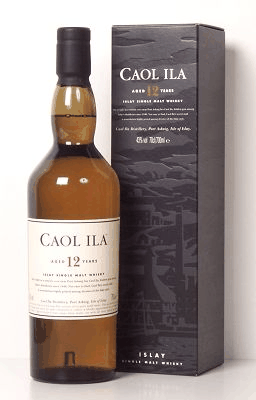
Caol Ila 12 yo
Islay Single Malt Whisky
43% abv
£27
$58.90 (CAD)
$45 (USD)

Caol Ila (pronounced kull-eela or like THIS) means 'Sound of Islay' as it overlooks the narrow strip of water of the same name that lies between the islands of Islay and Jura. The phallic stills have a great view of Jura's Paps (mountains so named because of their resemblance to a pair of breasts), enough to keep them well excited over the years. It is one of two operating Islay distilleries owned by Diageo.

Built in 1846 and located on the north shore of Islay, near Port Askaig, Caol Ila's stills have fallen silent three times in its history: 1930-37, 1941-45, 1972-74. Like other Islay distilleries Bunnahabhain and Bruichladdich, when Caol Ila was built by Glasgow businessman Hector Henderson it created a full community of its own. Henderson went out of business in 1857 and the distillery was purchased by Bulloch Lade & Co. The Distillers Company Limited (DCL) took over management in 1927. Production continued with a few silent spells until 1972, when the entire structure of the distillery was demolished. A larger distillery was built, some say rather brusquely, and production resumed in 1974.
The old warehouses remain and bear the large black letters of the distillery name.

For many years, Caol Ila was the unsung workhorse of Islay distilleries and therefore doesn't enjoy the same celeb status that its neighbours in Bowmore and down on the south shore of the island do. It is the largest distillery on Islay and one of the largest that Diageo owns. The bulk of its output goes to blends and since 1999, they have produced whisky with unpeated barley for a few months each year, until recently used exclusively for blending (now some of this stock is released as Caol Ila 8 Unpeated). Caol Ila was available as a part of the Flora and Fauna series launched in 1989 as a 15 year old. In 2002 the 12, 18 and Cask Strength that we most commonly find on shop shelves were launched.

This whisky will be guest-tasted by my good friend JM who lost his truck but kept his life in an unfortunate car accident recently. The following are his impressions.

TASTING NOTES:

Salty sea air, peaty and smoky. Fresh air-dried bed sheets, sliced pear, granny smith apple peels.

Watery in the mouth but viscosity seems to increase with time. Instant smoke like a sudden wind change at a campfire, numbing and medicinal like Buckley's cough syrup, chewing on a Popsicle or lollipop stick, envelope glue.

SUMMARY:

This stuff inspires a lasting burn that leaves mouth and tongue tingly and sensitive like an hour after a trip to the dentist. Outdoorsy and rough even for a peat freak like myself.

Malt Mission #106
Malt Mission #107

Malt Mission #109
Malt Mission #110

Malt Mission HOME


Tuesday, June 26, 2007

Malt Mission 2007 #107

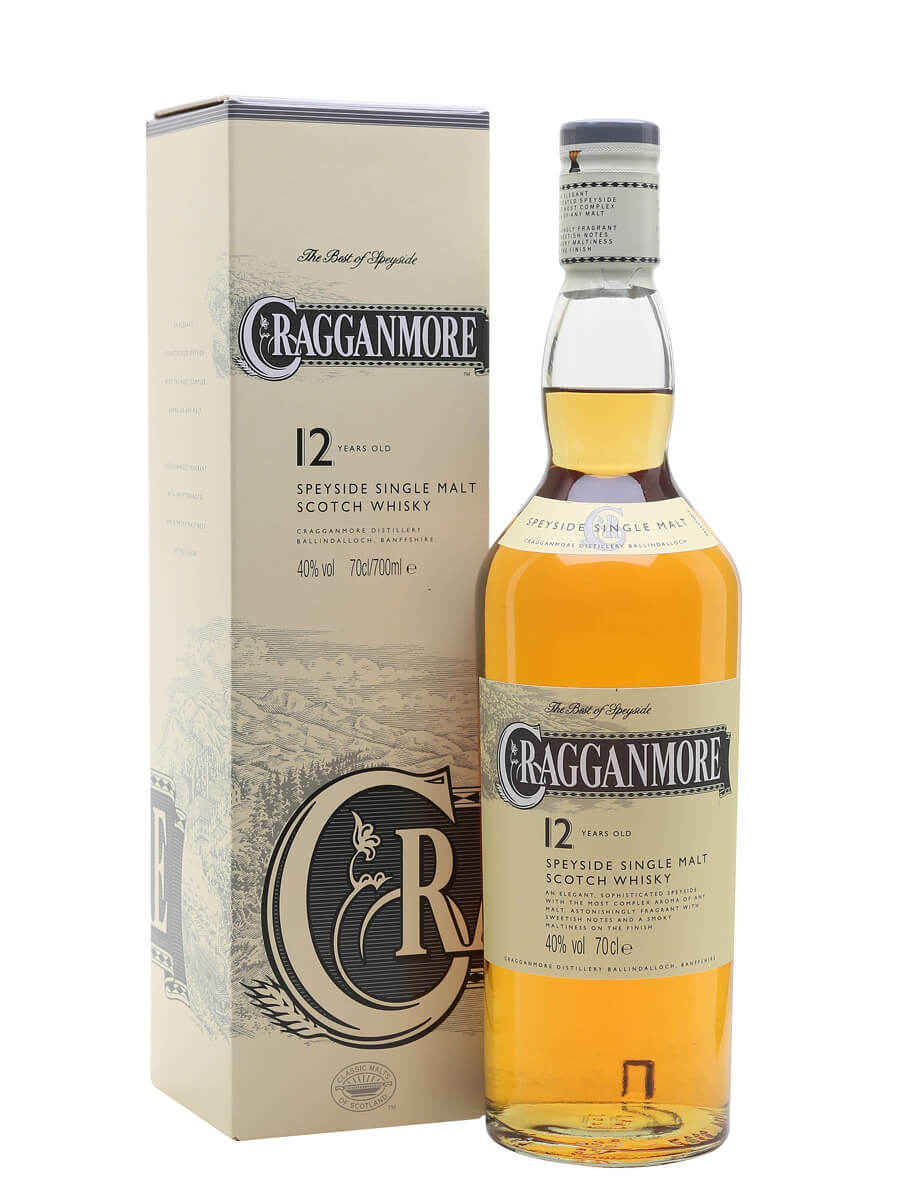
Cragganmore 12 yo
Speyside Single Malt Whisky
40% abv

£27
$65.85 (CAD)
$43 (USD)


Diageo (UDV) introduced Cragganmore Single Malt to the wider world in 1988 as the Speyside representative in their 'Classic Malts' range. It is still seen by many today to have been an odd choice against the thick competition of Mortlach, Glen Elgin and Linkwood, other top class blending malts that were all up for the spot.

Diageo owns the products of more distilleries than any other company, but we should remember that just as Diageo has shares in other companies, other companies have shares in Diageo. So maybe it is not monopolistic, but business is a bitch. While we can thank Diageo for helping to raise the profiles of many single malts, bringing them to more people around the world, we can also blame them for closing well over a dozen distilleries since 1997.


Cragganmore was founded by John Smith in 1869. John had plenty of distillery experience having managed Glenfarclas, Glenlivet and Macallan. He chose the location because of the readily available peat, the surrounding fields of barley, a good (and dam-able) water source, and proximity to the new railway line. He was a big whisky man and he was a big weighty man (22 stone/308 pounds). Another big name had a hand in Cragganmore and that was famed architect Charles Doig who modernised the distillery in 1901. It was expanded from two to four stills in 1964. The distillery has been temporarily closed twice, 1917-18 and 1931-34.

Cragganmore has unusual stills that come to a T-shape, making them flat at the top (Reflux Bowls necks). This apparently has the effect of more reflux of the heavier, oilier vapours, causing them to be distilled again. It is seen by many as the most complex of all Speyside malts, but I am always amazed by how many people seem to hold Cragganmore in contempt, or something. Strange how that happens. Only recently has Diageo started to release any variable expressions of Cragganmore and perhaps with more releases this contempt will wane.

Trivia? 5 out of the 6 classic malts still use worm tubs (
a long, coiled copper tube, attached to the end of the lyne arm of the pot still, and fitted into a large wooden vat filled with cold water) to condense the vapours coming off the stills. Lagavulin is the odd one out. Many people still feel that the end spirit that condenses in a worm tub is quite different from spirit cooled by modern condensers, but who knows?

TASTING NOTES:

Enormous impression on the nose, full spectrum. A real beast to unpack... Mash room aromas of malt and yeast and sweet oatiness. Fruit, vanilla yoghurt, vanilla rooibos tea, banana peel. Sweet Oak, mouldy oak, green oak. Some smoke. Too lazy to go on, but certainly complex enough to fill a page with impressions.

Cooling. Hearty. Honey, apricots, toasted nuts. Plastic bags. Celery or some fennel. Chewy maltiness with smoke increasing through the bready finish.

SUMMARY:

Obviously the product of extremely well selected bourbon casks working in combination to create a complex but elegant malt. As I mentioned above, I am amazed that anyone could bad-mouth this whisky as it is a real prince among its Speysider peers.

Malt Mission #106
Malt Mission #108
Malt Mission #109
Malt Mission #110

Malt Mission HOME

Monday, June 25, 2007

Malt Mission 2007 #106

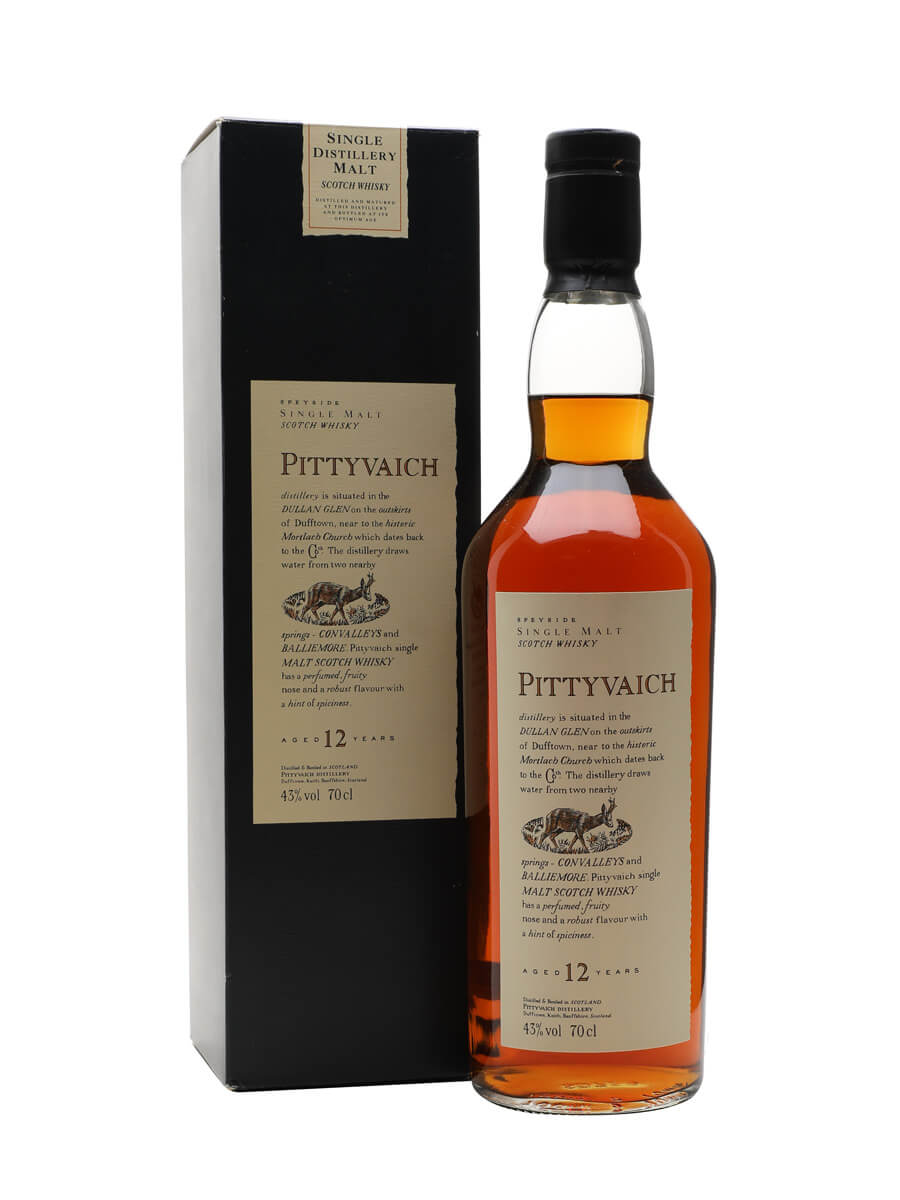
Pittyvaich 12 yo
Single Malt Whisky
43% abv
£40

This week we are going to be tasting a group of Diageo-owed malts. Diageo owns several very big brands including Guinness, Bailey's, Smirnoff and Johnnie Walker. It is the biggest booze company in the world and has been a steady recipient of both criticism and compliment. More on Diageo's history as it relates to Scottish whisky as the week unfolds.

Dufftown is known as the capital of distilling in Speyside, and after Glendullan became the 7th distillery in the area in 1897 it is said that the rhyme "Rome was built on seven hills, and Dufftown stands on seven stills" began to circulate. Arthur Bells and Sons jeopardized the accuracy of the rhyme when they built Pittyvaich in 1974... Allt-a-Bhainne (1975) and finally Kininvie (1990) really pushed the ryhme into irrelevance. Thankfully, for those who love the Rome rhyme, distillery closures did help the accuracy return, but it didn't last very long.

Used for Bell's blended whisky, the first release as a single malt was in 1991 as a part of the Flora & Fauna series. Two years later the distillery was mothballed. For nearly 10 years the fate of Pittyvaich was undecided, sitting silent as a malt distillery but being used intermittently for trials of different distilling techniques. In 2002, the building was dismantled, equipment was sent to Clynelish, and the official status of Pittyvaich became 'demolished'.

There are several independent releases available from Duncan Taylor, Cadenhead's, and Gordon & Macphail's, among others.

TASTING NOTES:

Cinnamon, cooked pears, sherried sweetness. Buttery cookie dough, shortbread.

Slightly spirity but appetising. Toasty, stewed apples and pears, dry sherry. Digestives. Drying, leaving tastes of the smell of newpaper with some spiciness.

SUMMARY:

Pleasant enough with a good, sweet malted barley taste balanced against sherry and oak. Michael Jackson has called it "a Scottish grappa", and has meant no compliment by it. I wouldn't be so hard on this whisky. I have used it at tastings and it has gone down quite well with the crowd. I would call it a pudding-before-the-meal whisky. Sweet and spicy, but simple and dry, and subsequently quite nice to serve right before a meal over conversation, grapes and oat cakes.

Malt Mission #105
Malt Mission #107
Malt Mission #108
Malt Mission #109
Malt Mission #110

Malt Mission HOME

Friday, June 22, 2007

Malt Mission 2007 #105

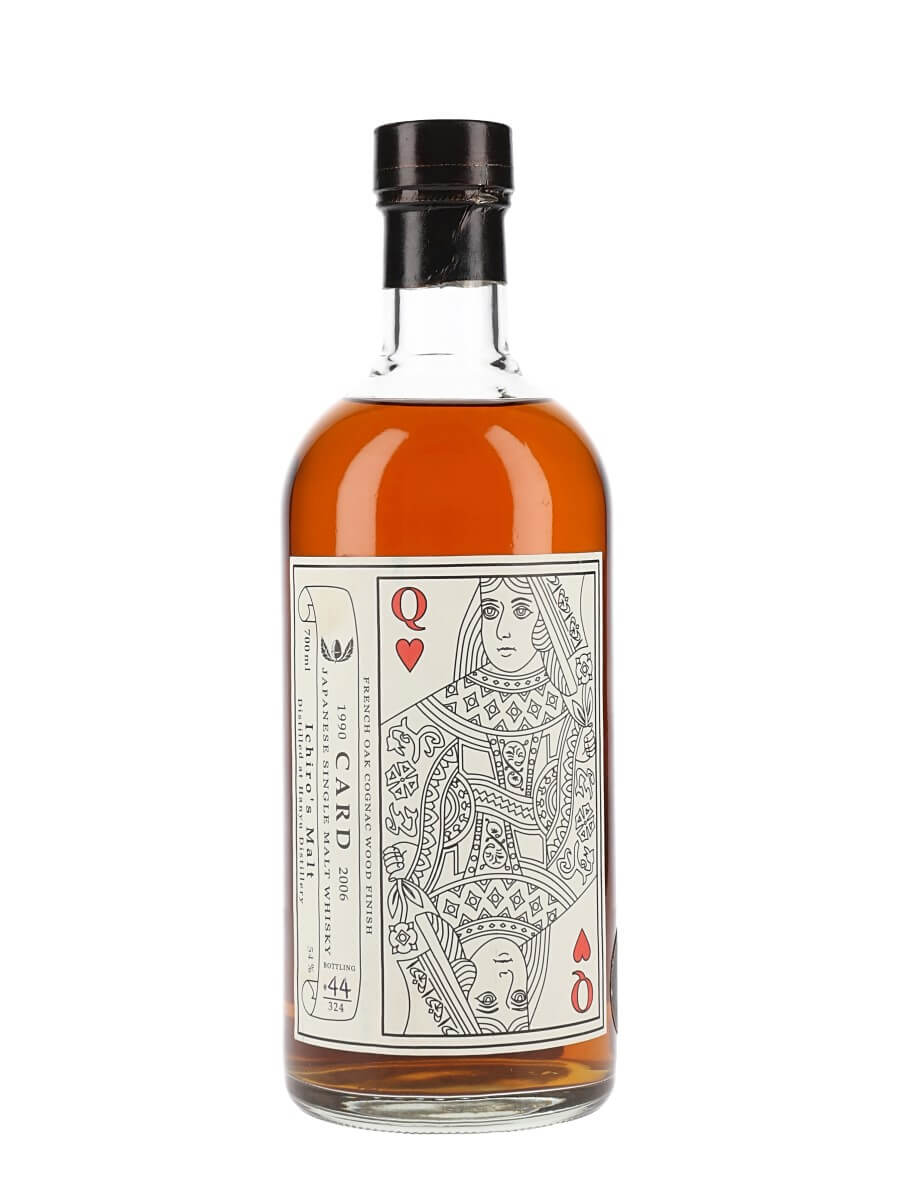
Ichiro's Malt Queen of Hearts
Hanyu 1990 (2006)
Bottling 107/324
54.6% abv
£85

I have had fun tasting this international week, but I look forward to getting back to Scotland where my knowledge base is much wider and I wont need to research/spend as much time as I had to this week. Learned a lot though, and hope you learned something too.

This is a single cask, single malt whisky from Hanyu, a distillery that WAS located in the town of the same name on the banks of the Tone river. The Toa company that owned the distillery went bankrupt and stopped distilling in 2000. Under new owners, the site was was completely dismantled in 2004. Ichiro Akuto, the grandson of the founders of the Hanyu distillery, managed to save the maturing stocks and is planning to set up a new distillery.

This is one part in a series of releases on a theme (I think you get it, with the whole deck of cards thing; Queen of Hearts, 2 of clubs, Ace of Hearts, etc.) Other releases tasted at the Whisky Pages. I will taste another soon.

Ichiro Akuto has been quite lucky that the maturing casks are apparently quite good and pleasing palattes the world over. More detailed information on Hanyu at Nonjatta,
the site for Japanese whisky (in English).

This particular cask was matured in an ex-bourbon Hogshead and then finished (what's this?) in an ex-Cognac French Oak cask. Again, big thanks to The Whisky Exchange for the taster.

TASTING NOTES:

Alive and energetic. Salt. Licorice. Spicy. Lime and cheescake. Wood, plaster, a building site. Some smoke that becomes more evident with water. As does an apple cider smell with more candied licorice, Bassetts Allsorts.

Soft, but active in all parts of the mouth, exciting. Plaster again, but a lot of oak and sweet pie-like flavours. Pecan pie.
Black wine gums, white wine, dry oakiness that rides onto the finish with fresh fennel and some more spiciness. With water it tastes just like a warm pecan pie with cream. Cafe au lait. Pleasant shisha smoke aroma. Finish is more apricot and soft old peach now. Empty glass minutes later has gorgeous filter coffee and brown sugar scents.

SUMMARY:

Exciting, adventurous whisky. Busy and a whole lot of fun to drink and talk about. Great packaging/theme labelling. Comparisons for context? Tough one...toughest one this week! Um, Dalmore, Old Pulteney 17, Cragganmore, and Glenlivet French Oak.
One complaint/question? The screw top. If someone is spending these prices on whiskies, rare whiskies, one hopes they won't be consumed quickly. Do these caps allow more or less evaporation in the bottle? Once opened? Might be a concern for consumers and/or collectors. Am I wrong? Be in touch/comment.

Malt Mission #101
Malt Mission #102
Malt Mission #103
Malt Mission #104

Malt Mission HOME

Thursday, June 21, 2007

Malt Mission 2007 #104

Mackmyra Preludium:03
Swedish
Single Malt Whisky
52.2% abv

£42.50

Founded in 1999, Mackmyra was first a small scale (30 litre stills) 'test-run' distillery that ran experiments for a few years before going into full production at the full-scale (8000 litre stills) site in 2002. From these experiments came a variety of recipes, of which two are used today: one untainted by smoke, and one 'peated'. The first is from barley dried with just hot air, and the other dried with some peat or bog moss AND juniper tree twigs. Everything is sourced in Sweden, from the water to the barley to yeast to the juniper... Truly Scandi.

Like Glenora Distillery in Nova Scotia, Canada (producers of Glen Breton Rare Canadian Single Malt Whisky), Mackmyra has attracted some critical attention from the Scotch Whisky Association because the 'Mac' in their name might mislead customers into thinking it is Scottish. Right, well we have Glens in Canada, too, if the big maple leaf and word CANADIAN on the bottle don't do the trick [maybe Glenora should get on Macallan's back about the big maple leaf on their new Amber liqueur, someone might think Macallan is Canadian(?)]. And which part of Svensk Whisky are they afraid we won't understand? Enough about that...

The Preludium series uses casks from the early experimental days and from the current distillery, with different casks, different malted barley, different cask sizes, different maturing locations... a bunch of variables with which Eskil Tunberg and the rest of the team at Mackmyra Svensk Whisky can do with whatever they choose! And so far, the results have been wholly unique if not incredibly promising. They are therefore trying a few different styles with each expression in the series. The series will reach a total of 6 by the end of 2007. Prelumdium: 4 is already available from Royal Mile Whiskies. This sample was shared by the amazing Whisky Exchange

This stuff gets swept up by Swedes almost as soon as it hits shelves; one would think that Systembolaget (Sweden's State-run wine and spirit monopoly) gets a pretty miserable allocation. Mind you, the rest of us are doing a pretty good job of buying up the rest... Mackmyra Preludium 3 caused a buzz at Whisky Live in London and good things keep coming to, and from, this young distillery.

TASTING NOTES:

Young, hot nose, with sweet smoke, uncrushed peppercorns, lemon juice, and oak. Sappy new/living wood fires. Sour yeastiness emerges with time in the glass as well as some toffee.

Clay, big wood on the palate then an eruption of fresh tobacco and aromatic smoke, toasted oak. Heavy smokiness as well, with a soil-y swampiness and depth that eventually gives way to biscuits, vegetable oil, and a slow re-surfacing from the depths of the earth. Ginger. Sumac.Salt, lager/brewers yeast?, and yes, juniper.

SUMMARY:

Doesn't come easy, doesnt go out of it
s way to charm, but does begin to flirt with patience and attention. Will not be for everyone because while it is unique, it is not totally 'together', and the youth may repel some palates as well. Comparisons? 01 was light, young, fragrant and similar to a Scottish Lowlander, 02 was a spicy, more sherried Speysider, the 03 is some odd island style, Ledaliskapa Park 5yo.

Malt Mission #101
Malt Mission #102
Malt Mission #103
Malt Mission #105


Malt Mission HOME

Wednesday, June 20, 2007

Malt Mission 2007 #103

YamazakiSuntory Yamazaki 10yo
Japanese Single Malt Whisky

40% abv
£25

The second of three Japanese whiskies I will be having this week. Turning Japanese? I really think so.

Shinjiro Torii founded Yamazaki, the first whisky distillery in Japan, in 1923 in the Yamazaki Valley near Kyoto. As mentioned on Monday, the distillery was supervised by Masataka Taketsuru. The first whiskies released by the company were Shirofuda in 1929, followed by Kakubin in 1937 and Old in 1940.

The extensive research facilities at Yamazaki have spawned a variety of changes at the distillery over the years and has resulted in the fact that the distillery currently has six very different stills, uses various yeasts, heating and maturing methods. The benefit is that Yamazaki has the ability to make a variety of styles for its blended whiskies. Because of the innovations in technique, Yamazaki is viewed as a truly Japanese whisky, rather than a traditional, Scottish-style distillery like Yoichi (Hokkaido).

Suntory is the largest company in the world of Japanese whisky. They have a very large grain distilling capacity and distill malt with pot stills at three distilleries: Hakushu (1973), Hakushu Higashi(west) (1981), and Yamazaki (1923). They produce many blended whiskies, as well as the premium blended whisky called Hibiki (that comes in stylish bottles).

Japanese malts used to be limited to a very limited foreign market, but now Suntory whiskies are exported to 25 countries. In 2006, they released Premium Soda, soda water sourced from Yamazaki and intended for use in a whisky and soda. Their visitor centre, where, among other things, you can taste the difference between whisky distilled in direct and indirect fired stills, won Whisky Mag's Visitor Centre of the Year 2006.

Suntory also has a great advertising tradition for their products.
Great old advert HERE (not exactly advocating responsible drinking), high-art advertising HERE(Kurosawa and Coppola), Sean Connery making a great face HERE, and a classic Suntory-related moment HERE (Lost in Translation)

More on Suntory and Japanese whisky at The Whisky Pages

TASTING NOTES:

Cherry pie, sugar powder necklaces, children's Tylenol, paint/emollient oils. Some spice. Synthetic fruit flavours and creamy vanilla, Italian fruit-and-cream hard candies.

Soft oak, vanilla, pleasant oily mouthfeel. Cinnamon. Oil flavours develop, but now nuts and sesame oil (not the toasted Chinese kind).

SUMMARY:

Lively and appetising on the nose, really wakes you up... and that is not only because it is morning. Sensuous mouth feel with rounded edges, and bit of spice. Not a lot of development, but pleasant the whole way along.

Malt Mission #101
Malt Mission #102

Malt Mission #104
Malt Mission #105

Malt Mission HOME

Tuesday, June 19, 2007

Malt Mission 2007 #102

Connemara
Peated Irish Single Malt
40% abv
£25
$65(CAD)
$40(USD)

The term 'whisky' is an Anglicisation of the gaelic term 'uisge beatha'. For reasons unknown to me, the spelling of the term in the English language is 'whisky' in Scotland and Canada, and 'whiskey' in America and Ireland. Although there are slight variations in recipe, both spellings refer to a grain-based distilled spirit, and in spite of the fact that some wealthy businessmen are working to call Indian 'whiskey', rum, and horse piss 'WHISKY', this is the way it should, and hopefully will, always be. Go grain, or go home.

It is said that Ireland was once home to 2,000 whiskey distilleries, but by 1980, this had been reduced to 2, both owned by a single company. Interested in more information? Get THIS book.

Studying at Harvard Business School in 1970, John Teeling began an investigation into whether or not it would be possible to revive the fortunes of the Irish whiskey business. His research caught the passion of Willie McCarter at MIT and 17 years later, with the help of John Power, they raised £3million and purchased the Ceimic Teo distillery in Dundalk, a vodka producing plant. They also purchased Locke's Kilbeggan Distillery in 1988 to use as a storage site for the future Cooley whiskies. In 1989, two pot stills were installed and production commenced.

Economic difficulties hit them almost immediately but were resolved through the involvement of independent investors and bright ideas rather than Cooley just being swallowed up by Irish Distillers (this did almost happen, however, but was deemed illegal by the Competition Authority). One thing that helped the economic situation of the distilling company was to enter the 'retailer's-own' sector and begin producing in-house brands for British supermarkets Sainsbury's and Waitrose.

Cooley's has a capacity to produce 10million litres of whiskey per year and currently has a wide range of different releases: a single grain called Greenore, and blends Kilbeggan, Inishowen and Millar's Special Reserve. They also produce three different single malt ranges: Locke's, Tyrconnell, Connemara. Knappogue Castle is also sourced from Cooley distillery from 1990-1992, and Jon, Mark, and Robbo's Smooth, Sweeter One uses Cooley malt whiskey.

Cooley's malt whiskies are unique from most Irish whiskies in that they are distilled only twice, rather than the traditionally Irish triple distillation. Connemara is even more unique in that it is the only Irish peated whiskey. It was officially launched in 1996.

TASTING NOTES:

Honey and lemon, green grapes, skin cream/lotion. Very fresh on the nose. The peat is in there, but it is all so perfumed, estery,
and free of the associations that often appear with peat smoke that it could go unnoticed. Apple crumble, margarine, and a touch of animal hide.

Okay, well the smoke will not go unnoticed on the palate, but it is so clean, and surrounded by floral sweetness, that to compare it to a Scottish whisky would not quite be fair (to either). Peated barley at the heart of the flavours, grassy, and increasingly drying. Oak and almonds.

SUMMARY:

A unique peated whiskey experience. Very drinkable, even quaff-able, with sweetness, and an interesting summer weeds type of presence. And plenty of peat, but don't expect a peat beast; this is driving-through-the-country window-seat-peat.

Malt Mission #101
Malt Mission #103
Malt Mission #104
Malt Mission #105

Malt Mission HOME

Monday, June 18, 2007

Malt Mission 2007 #101

Nikka 'Red' Pure Malt
Vatted Whisky

43% abv

£24 (50cl)


This week we will try something new on the Malt Mission and look at a few international malts. This is a good starter as it is quite literally 'international', in that it is sourced from different countries.

After working for Kotobukiya (Suntory) for over 10 years, Masataka Taketsuru, arguably the grandfather of Japanese malt whisky, started The Great Japan Juice Company in 1934. The company did indeed produce juice, and by 1952 came to be known as Nikka Whisky Distilling Co.

Taketsuru learned his skills in distilling spirits studying at Glasgow University in Scotland in 1918. he followed this with further hands-on study at Hazelburn (Campbeltown), Lagavulin (Islay) and Longmorn (Speyside). He then worked at the company that is known today as Suntory, helping them build their first distillery in 1923 (Yamazaki). When he left Suntory to start his own company, he built Yoichi distillery on Japan's most northern major island, Hokkaido. Although inconveniently located, it was perfectly situated fro whisky production, according to Taketsuru (Nonjatta has a great piece on Taketsuru HERE). Surrounded by mountains on three sides and having pure a water source that comes from underground springs that rise through peat bogs, Yoichi is a very traditional-style distillery that still direct-fires its stills with coal (this once-common practice is a piece of history in Scotland, partly because of EU standards on coal emissions).

In 1969, Nikka built Miyagikyou/Sendai distillery on Honshu, Japan's main island. Teh site was picked after Masataka Taketsuru made a mizuwari using the water source of the prospective distillery and proclaimed, "This water is excellent. I've decided, this is the place!" The company produces the bulk of its malt for blending here using steam-heated stills. The distillery is also capable of producing grain whisky with its Coffey still.

The Pure Malt format was, at one time, the most common sort of whisky produced in Japan, and this is just one of Nikka's colours series (others are 'black' and 'white'). This one is a 'pure malt', or vatting of Japanese single malt whisky from Miyagikyo/Sendai Distillery (using the Coffey still) blended with Scottish single malt whiskies.

Notes in quotes can be attributed to Kristin.

TASTING NOTES:

Bright and fruity. Candied peanuts. Tahini. Peaches and cream. "Still, trapped air, like going into a tent, or a cottage or shack that has been locked up for a few seasons." Time allows some herbaceous (grass, parsley) elements to emerge and water softens the brightness and brings out a touch of peat, roasted aubergine/eggplant or soil. "Becomes outdoorsy"

Again, bright and fruity, butterscotch. Sugary black tea. Fresh and lively. Fills out with some earth and peat, but remains confection-ary. Slightly smoky in the toastiness at the end. Water really exaggerates the earthiness and it becomes a surprisingly chewy whisky.

SUMMARY:

Perfectly clean, fresh, summery malt. I loved the oscillation between candied orange and earthy smokiness. Wholly unique, but to offer some points of reference, Kristin finds it comparable with a features of Bell's blended whisky while I find it shares features with Rosebank, unpeated BenRiach and young Talisker. Love the packaging, too.

"Spirity. Woody. Sweet. That's about it. Blend-ish. Did they pour caramel into this?"

To each their own.

Malt Mission #100
Malt Mission #102
Malt Mission #103

Malt Mission #104
Malt Mission #105

Malt Mission HOME